Technical case studies

From operating problem to verified implementation.

Detailed case studies from verified automation, AI and systems-integration work.

StrategyArchitectureDeliveryOperations
CASE 01Automation · Workflow · Commercial Operations

Quotation App Workflow

Project context: This implementation is presented without identifying the organization. Additional client and sector detail will be included only when approved for publication.
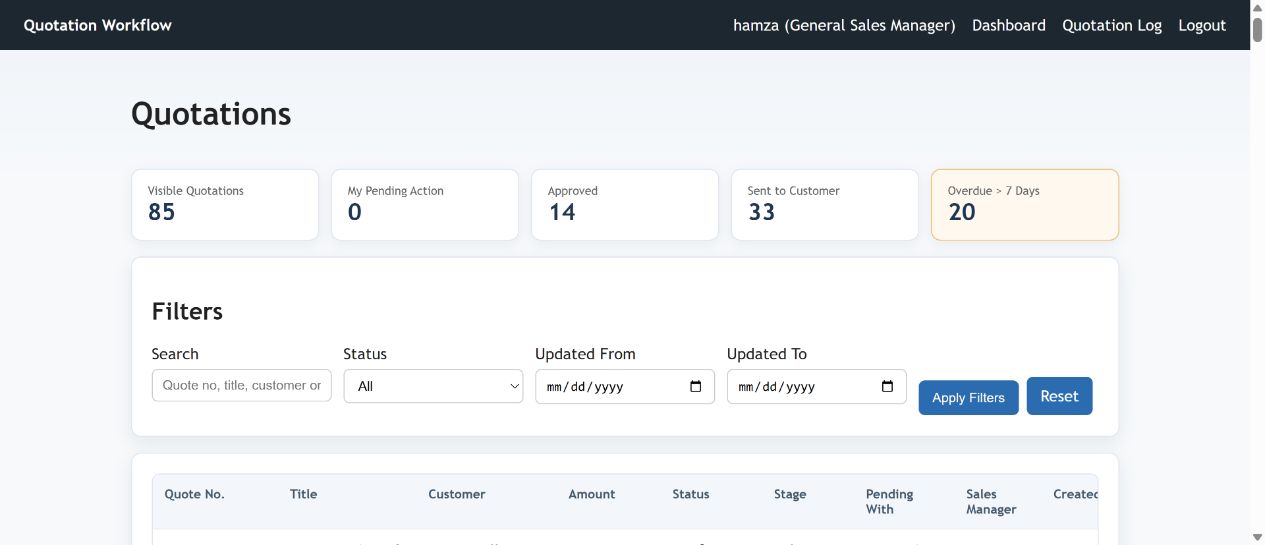
Quotation Workflow dashboard showing quotation status, review stages and operational filters
Quotation Workflow application dashboard. On-screen record counts are interface evidence, not published performance claims.
Problem

Preparing a quotation required information to move through disconnected stages: supplier documents, pricing calculations, commercial adjustments, internal checks and final customer-facing output. Repetitive handling increased turnaround time and created avoidable risk around transcription, calculation consistency, version control and document quality.

Analysis

The workflow had to preserve the detail and structure of technical supplier offers while applying internal commercial logic consistently, without hiding assumptions or removing human control from commercially sensitive decisions.

Technical approach

Designed an end-to-end quotation workflow that organizes source documents, maps line items into a consistent structure, applies defined cost and pricing inputs, and generates a standardized quotation for review. Source data remains separate from calculated values so commercial decisions stay visible and traceable.

Architecture

Supplier quotation and project inputs → structured data extraction → item and pricing normalization → commercial calculation rules → controlled review → branded quotation output.

Implementation result

Consolidated a fragmented quotation process into one controlled workflow, reducing repeated data handling and improving consistency across calculation, review and presentation. Exact time savings, error reduction and quotation-volume metrics require a confirmed operating baseline.

My role

Process analysis, workflow architecture, calculation design, automation development, output standardization and validation.

Technologies

Workflow automation, Python, Excel, structured document processing, pricing logic, PDF and spreadsheet outputs

Evidence standard

Application captures document the delivered interface. Quantified business outcomes remain limited to evidence already verified; identities and commercial baselines are added only when approved.
CASE 02AI · Documents · Sales Automation

Q_Gen 2.0

Project context: This implementation is presented without identifying the organization. Additional client and sector detail will be included only when approved for publication.

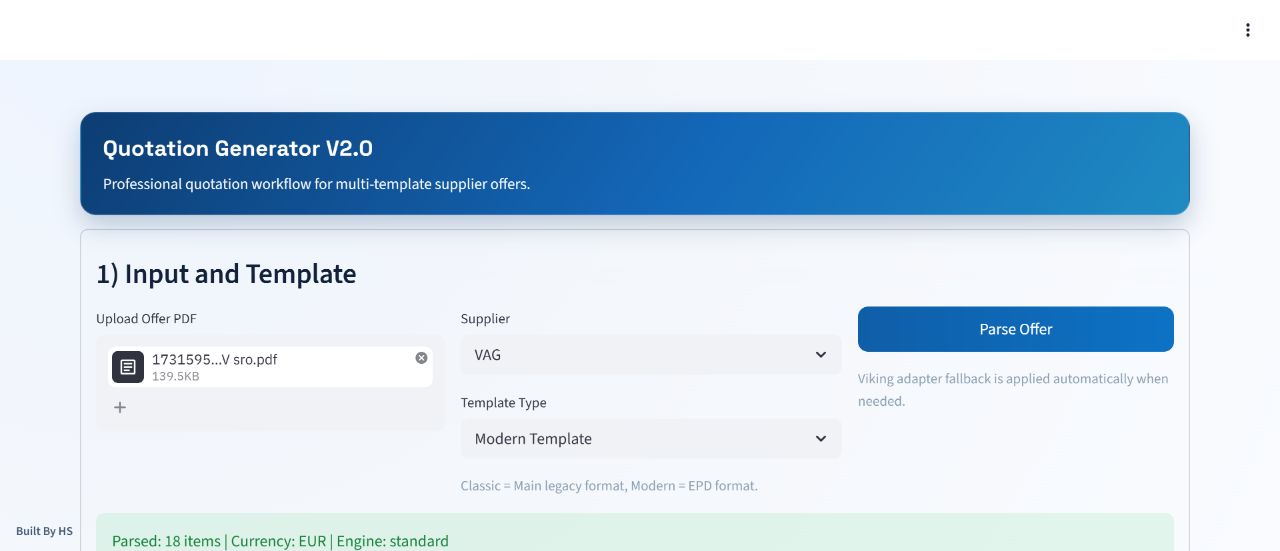
Quotation Generator version 2 interface with supplier PDF upload, template selection and parsing controls
Q_Gen 2.0 quotation preparation interface using a supplier offer and controlled template selection.
Problem

The quotation process still depended on substantial manual interpretation, spreadsheet handling and document assembly. Supplier offers varied in format and complexity, while freight, inspection, currency and commercial adjustments had to be applied accurately before producing a customer-ready quotation.

Analysis

The system had to interpret inconsistent supplier documents without inventing missing data, preserve technical descriptions and quantities, apply commercial inputs transparently, and fit an established company quotation template.

Technical approach

Rebuilt the workflow around a structured quotation model. Q_Gen 2.0 extracts and organizes supplier-offer content, maps it into the required workbook structure, applies explicit commercial inputs such as freight and third-party inspection, and produces a review-ready quotation with visible exceptions.

Architecture

Supplier PDF → document extraction and item mapping → normalized quotation model → landed-cost and pricing calculations → review checkpoints → standardized Excel quotation.

Implementation result

Reduced repeated document handling and created a more consistent path from supplier offer to internal costing and customer quotation. Exact throughput, time-saving, accuracy and margin-impact figures require measured production evidence.

My role

Product definition, workflow redesign, data-mapping logic, costing architecture, generator development, template integration and output verification.

Technologies

Python, PDF extraction, structured data mapping, Excel automation, formula-driven costing, template-based generation and validation controls

Evidence standard

Application captures document the delivered interface. Quantified business outcomes remain limited to evidence already verified; identities and commercial baselines are added only when approved.

Start with the business case

Build the next case study around a real operating result.

Bring one process, integration problem or operating constraint. We will define the right first step—without forcing AI where simpler engineering works better.

Discuss your project